
How to make creativity operational within a performance-driven marketing framework

Chasefive Management

In modern marketing, creativity and performance often seem at odds — one thrives on freedom, the other demands structure. Yet within the FAPI Marketing Framework, these two forces are intentionally designed to coexist.


The Plan Master — the central leadership role in FAPI — is responsible for integrating creativity and innovation within a structured, data-driven system. This means ensuring that imaginative thinking is encouraged, but also anchored to commercial and strategic outcomes.


In practice, the Production Executives (the creative and technical professionals who execute campaigns) must receive a clear and structured creative brief that defines the strategic intent, boundaries, and success metrics for their work. In FAPI terms, creativity doesn’t operate in chaos — it flourishes within a defined frame.
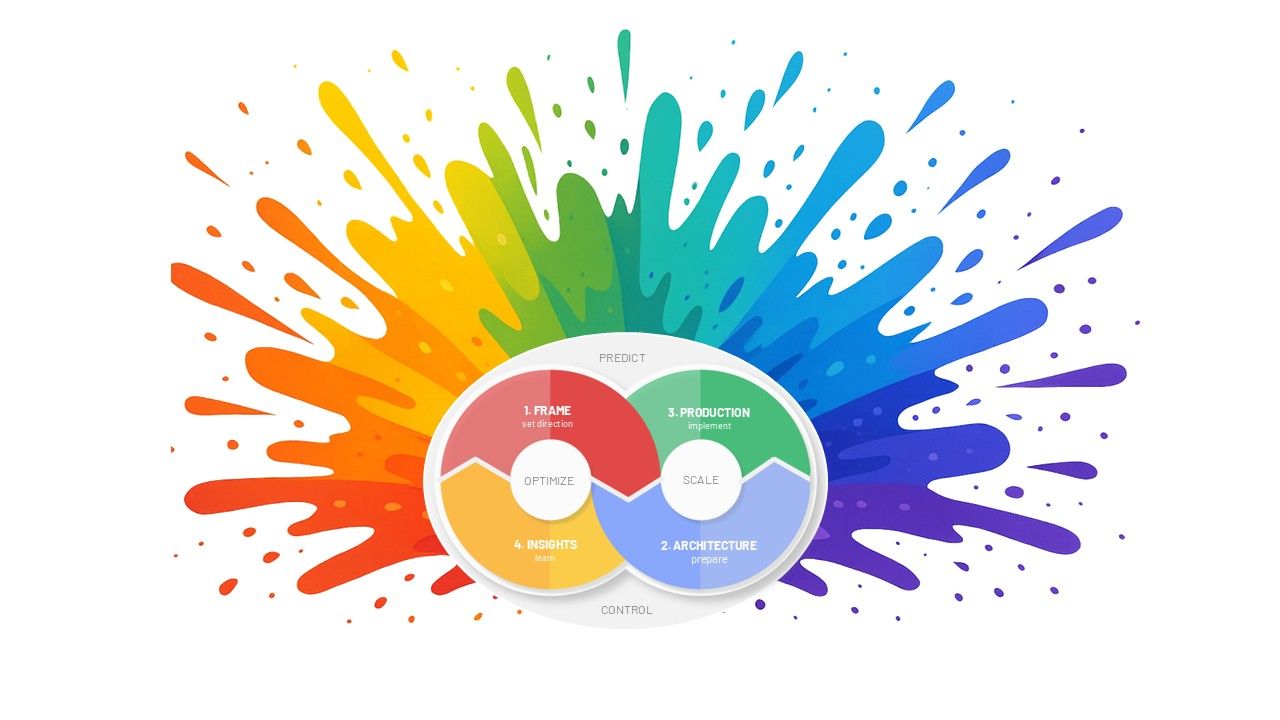

FAPI Marketing Framework Creativity

Innovation with structure


Boundaries aren’t limitations — they are catalysts.


The Plan Master uses defined constraints such as budget, scope, and timelines to focus creative problem-solving rather than restrict it. This disciplined approach fosters innovation through continuous improvement ensuring that every new idea contributes to long-term growth and efficiency.


By collaborating closely with Production Executives, the Plan Master guides teams to explore new directions that are both fresh and feasible. Within the FAPI Marketing Framework system, experimentation isn’t random — it’s managed, measured, and refined over time to produce repeatable creative excellence.


Strategic alignment of creativity


For creativity to truly drive business outcomes, it must be aligned early — not retrofitted later.


The Plan Master ensures that creative thinking is integrated into strategic planning from the start, linking each idea to the foundational modules of the FAPI Framework:


  • The Frame Module defines the core brand identity and the overarching “Big Story” — the narrative that unifies purpose, positioning, and promise.

  • The Architecture Module translates this story into actionable communication structures across channels, ensuring consistency and cohesion.

Through this structured alignment, creativity gains direction and focus. Every piece of storytelling serves a defined strategic function — resonating with audiences while reinforcing the brand’s central narrative.


Data-driven validation


In FAPI, creativity doesn’t end at execution — it extends into validation.


The Plan Master mandates that every creative initiative be rigorously tested using Performance Metrics (engagement, reach, ROI) and Impact Metrics (brand perception, strategic influence).


This analytical discipline shifts focus from content volume to creative value — rewarding ideas that not only attract attention but also drive measurable impact. The Framework incorporates external quality principles such as Google’s E-E-A-T standards (Experience, Expertise, Authoritativeness, Trustworthiness) to ensure that all output maintains credibility and relevance.

Balancing imagination and accountability


The genius of the FAPI Marketing Framework lies in its ability to make creativity operational.

By defining clear strategic boundaries and embedding measurement systems within the creative process, FAPI allows innovation to thrive without losing accountability.


In this environment, creativity isn’t just encouraged — it’s engineered to perform.


Every imaginative effort contributes to a measurable outcome, ensuring that marketing remains both inspired and effective.

Because when creativity meets structure, marketing excellence becomes sustainable.


Visit the FAPI Marketing Academy to explore resources, frameworks, and practical tools that will help you and your team make smarter, data-driven marketing decisions.


By Chasefive Management January 19, 2026
The FAPI Marketing Framework Academy today announced the release of its 2026 Certification Course , representing the most significant evolution of its training program to date. Now expanded to 54 comprehensive lessons , the 2026 edition transforms the curriculum from a strategy workshop into a full-scale operational certification pathway designed to help organizations move from campaign execution to marketing organizational planning. 
By Chasefive Management January 2, 2026
In the noisy world of modern marketing, it is easy to mistake a catchy slogan or a viral campaign for a brand strategy. But true market power comes from something far deeper. According to the FAPI Marketing Framework , competitive positioning isn't just a marketing tactic—it is a mission-critical business decision that defines who you are, where you play, and why you matter. In the FAPI model, Competitive Positioning is the "North Star." It resides in the Frame Module , meaning it is a non-negotiable, long-term strategic foundation that must be established by leadership before a single piece of tactical planning begins. Here is how the FAPI Framework breaks down the art and science of securing your place in the market. 1. The Core Trinity: Defining Your Stance At its most basic level, FAPI dictates that you cannot position a brand until you have clear, distinct answers to three fundamental questions. These form your brand Positioning Statement : What is our core purpose? (Why do we exist beyond making money?) What is our core promise? (What can the customer always count on us to deliver?) What is our core capability? (What do we do better than anyone else?) If you cannot answer these, you don't have a position—you just have a product. 2. The Scorecard: Six Benchmarking Criteria How do you know where you stand relative to the competition? The FAPI Framework replaces guesswork with a scoring model. To find your distinct place in the market, you must benchmark yourself and your competitors against these six dimensions: Product/Solutions: The depth and range of what you offer. Purpose: How well your actions align with a stated cause (crucial for non-profits or purpose-driven brands). Pricing: Price competitiveness (typically, a lower price earns a higher score here). Credentials: The qualifications, awards, and certifications that prove your expertise. Innovation: Your ability to disrupt the market or challenge existing norms. Client Experience/Service: The delivery of exceptional service and support. By scoring these, you can visualize exactly where "white space" exists in the market and where you are currently winning or losing. 3. The Reality Check: Alignment is Not Optional One of the most powerful tenets of the FAPI Framework is Alignment with Product Reality . Positioning is not a coat of paint you apply to a crumbling wall; it must reflect what is actually being built. The Volvo Rule The framework cites Volvo to illustrate this. A manufacturer cannot position itself as the "Safety Brand" if its engineering team is designing open-top, reckless sports cars. If the product reality does not match the desired position, marketing cannot "spin" it. Instead, the business must reverse-engineer the positioning to align with what actually exists. 4. The brand "DNA" Factor: Strategic Immutability Because positioning sits in the Frame Module, it is treated as the business's DNA. It is not something you change just to capture a quick trend. The FAPI framework asserts that brand positioning acts as a hard boundary for the marketing team, rather than a flexible variable. Because positioning is part of a business’s fundamental "DNA," an established brand cannot simply pivot to a contradictory market segment—such as a premium provider suddenly targeting bargain hunters—merely to capture short-term revenue. Such a move is never viewed as just a "tactical campaign"; it represents the effective termination of the brand’s identity. Therefore, the defined position must serve as a strict guardrail, automatically disqualifying any marketing activity that conflicts with the brand's core promise, regardless of the potential for quick profit. 5. The Ultimate Judge: Consumer Validation Finally, the FAPI Framework offers a humbling truth: You don't own your position—your customers do. While leadership defines the desired position, the market validates it through Co-Production . A brand is only afforded the position that customers believe it deserves. In the FAPI Marketing Framework, positioning is not an exercise in creative writing. It is a rigid, strategic discipline. It requires honest benchmarking, strict alignment with product reality, and the humility to listen to your customers.
By Chasefive Management December 18, 2025
From Disconnected Activity to Structured Marketing Management As Onyx Coating continued to expand its global footprint across ceramic coatings, paint protection film (PPF), and surface protection solutions, the complexity of managing marketing across regions, products, and channels increased. Rather than treating marketing as a collection of individual tactics, Onyx Coating adopted the FAPI Marketing Framework to manage marketing as a structured, end-to-end business function . The framework provides a clear sequence— Frame, Architecture, Production, and Insights —that connects strategy directly to execution and measurement. This shift has allowed the marketing team to move away from ad-hoc activity and toward disciplined, repeatable planning. A Shared Master Plan That Eliminates Silos One of the most immediate impacts of implementing the FAPI Marketing Framework was improved alignment across the marketing team. According to Amjad Elsayed, Marketing Manager at Onyx Coating , the framework introduces an “engineering” mindset to marketing—one that forces structure, clarity, and consistency. “The FAPI Marketing Framework is a systematic approach that helps us plan and execute marketing with real structure,” says Elsayed. “It aligns the entire team around a shared master plan and prevents people from working in silos.” By establishing a single strategic Frame and a defined Marketing Architecture , every campaign, channel, and initiative is connected to the same objectives. This ensures that regional teams, product marketing, and execution resources are all pulling in the same direction. Clear Accountability Between Strategy and Execution Another critical advantage of the FAPI Framework is how it clarifies ownership and accountability inside the marketing function. In many organizations, responsibility for strategy and execution is blurred—leading to misalignment, duplication of effort, and gaps in delivery. FAPI addresses this by clearly separating strategic responsibility from executional responsibility. “The framework clearly defines who owns strategy in the Frame phase and who owns execution in the Production phase,” explains Elsayed. “That clarity improves accountability and raises the overall professionalism of the marketing team.” This separation allows senior marketing leaders to focus on strategic direction and priorities, while execution teams operate with clear briefs, expectations, and performance measures. Marketing as a Scalable Operating System For Onyx Coating, the value of the FAPI Marketing Framework goes beyond better planning—it creates a scalable foundation for growth. By embedding the framework into its marketing planning and management processes, Onyx Coating can: Maintain consistency across global markets Scale marketing activity without losing control or clarity Improve coordination between strategy, execution, and reporting Demonstrate marketing productivity and performance more transparently This structured approach supports Onyx Coating’s broader commitment to operational excellence and long-term brand leadership in the automotive paint protection industry. Raising the Standard for Marketing Operations The adoption of the FAPI Marketing Framework reflects a broader shift in how modern marketing teams operate. Rather than relying on individual brilliance or disconnected campaigns, Onyx Coating has chosen a system that treats marketing as a managed, accountable discipline. By applying structure, shared planning, and clear accountability, the Onyx Coating marketing team is better equipped to execute at scale—without sacrificing alignment or strategic intent. For organizations facing similar challenges, Onyx Coating’s experience highlights an important lesson: marketing performance improves when marketing is managed like a system, not a collection of tasks. Find out more about Onyx Coating at www.onyxcoating.com
By Chasefive Management December 15, 2025
Implementing the FAPI Marketing Framework is conceptually straightforward, but it can be operationally demanding, especially the first time an organization adopts it at scale. Generally, implementation is moderately to highly difficult because FAPI functions as an organizational operating system, not merely a campaign or tactical framework. The framework itself is clearly defined as four sequential modules— Frame, Architecture, Production, and Insights —with fixed deliverables and terminology, so teams do not have to invent their own processes from scratch. The real difficulty lies in aligning current ways of working, roles, and data flows to this end‑to‑end structure, which represents a significant change for many marketing teams. Unlike lighter models such as AIDA or the 4Ps—which can be applied independently to a single ad, channel, or product—the FAPI Framework requires a fundamental shift in how marketing operates within the organization. Specifically, it requires restructuring how the marketing function interacts with other business functions (including the C-suite) and how day-to-day work is planned, executed, and measured. Because the FAPI Framework is an organizational marketing management framework rather than a creative or channel framework, it demands changes to governance, decision-making, accountability, and execution discipline across the marketing function. Breakdown of implementation difficulty The framework is composed of four sequential modules, with implementation difficulty typically peaking in the first two phases. ✅ Frame Difficulty level: Medium Requires C-suite involvement. The "Plan Master" must extract and formalize marketing strategy keystones from leadership. ✅ Architecture Difficulty level: High Requires translation. High-level business goals must be translated into a structured, executable marketing plan before any creative work begins. ✅ Production Difficulty level: Low Standard execution (campaigns, content, activation). Most teams already do this well; FAPI simply adds structure and discipline. ✅ Insights Difficulty level: Medium Requires rigorous analysis. Teams must perform ego-free analysis focused on business outcomes—not vanity metrics—and feed insights back into the strategy. The three key implementation challenges If you attempt to roll out the FAPI Framework in your organization, you must plan to address the following friction points: A. The “Strategic Gap” ( Frame Module ) Most marketing teams operate in a tactical bubble—they infer business objectives and immediately begin execution. FAPI explicitly forbids moving into execution until the Frame is clearly defined and approved by the C-suite. The challenge: You must require the CEO or Board to provide clear, written input on commercial objectives, competitive positioning, and priority audiences before any campaigns launch. Many leadership teams resist this level of specificity and accountability. B. Project leadership. The Need for a “Plan Master”. The FAPI Framework depends on a clearly defined role—often referred to as the Plan Master or Marketing Architect. This role is not simply a CMO; it acts as the translator between executive intent and operational marketing execution. The challenge: It is difficult to find or develop an individual who combines: The strategic authority to challenge and clarify executive direction. The operational rigor to manage detailed plans, dependencies, and workflows. C. Implementing sequential discipline FAPI is an intentionally sequential system. Architecture cannot be skipped to accelerate Production. The challenge: In fast-moving or agile environments, teams are accustomed to “test and learn” approaches. FAPI requires teams to plan and build first, which can feel slow or bureaucratic to organizations that prioritize speed over structure. Factors that reduce difficulty On the other hand, the framework is designed to be learnable and repeatable. Guidebooks, training, and a defined playbook structure lower the conceptual barriers for both beginners and experienced marketers. Organizations that already manage campaigns with clear objectives, standard processes, owned data, and regular performance reviews will find much of FAPI maps onto what they already do; for them, adoption is more about renaming and tightening than wholesale reinvention.
By Chasefive Management November 26, 2025
In high-performance marketing organisations, success doesn't happen by accident—it is engineered. The FAPI Marketing Framework™ codifies this principle by defining clear roles, structures, and processes that transform strategic intent into measurable marketing outcomes. At the core of this system sits a pivotal leadership role: the Plan Master . Often misunderstood as a mere project manager or senior marketer, the Plan Master is, in reality, the marketing operational architect , strategic interpreter , cross-functional conductor , and insights-driven decision maker behind the entire FAPI program. They are the "glue" that holds together the four modules of the FAPI Framework—Frame, Architecture, Production, and Insights—and ensure that strategy and execution flow as one continuous system. This article explains what makes the Plan Master role so central to marketing performance, why it exists, and how it elevates a business’s marketing capability far beyond traditional marketing management. How the Plan Master Operates Across All Four FAPI Marketing Modules The Plan Master is the only role that spans the entire framework. Their responsibilities shift and expand as the organisation moves through Frame → Architecture → Production → Insights. 1. FRAME MODULE: Vision Decoder / Encoder At this stage, the Plan Master ensures: Commercial objectives, competitive analysis, and audience definitions are complete and correct The senior leadership’s strategic direction is accurately captured in the framework All stakeholders understand and agree upon the strategic foundations before any planning begins The output of the Frame is strategic clarity—owned, maintained, and enforced by the Plan Master. 2. ARCHITECTURE MODULE: Operational Architect & Designer Key responsibilities include: Designing the operational Architecture for the marketing function Coordinating and producing the Marketing Playbook Defining the tactical marketing model appropriate for the organisation Overseeing financial management and ensuring a strong Return on Marketing Investment (ROMI) In this module, the Plan Master becomes the blueprint engineer—turning goals into workflows, budgets, and actionable plans. 3. PRODUCTION MODULE: Coach, Drummer, and Operational Leader Once the plan is activated, the Plan Master shifts into execution mode: Leading kickoff meetings Supporting Production Executives Removing roadblocks and enabling the team to move faster Ensuring every task aligns with the Marketing Playbook Blending creativity with commercial discipline They keep the rhythm of the system—the “drummer” ensuring pace, tempo, and consistency. 4. INSIGHTS MODULE: Master of Insights The Plan Master also leads the measurement and optimisation engine: Establishing benchmarks and KPIs before execution begins Organizing data flows and reporting structures Interpreting results and turning them into improvements Driving continuous optimisation across all modules Their role ensures that marketing does not operate on intuition, but on structured learning and measurable performance. The Management Style That Defines a Plan Master The Plan Master’s effectiveness is not based solely on technical skill. Their leadership style is just as crucial. Servant Leadership They empower teams, rather than command them. Their focus is on enabling others to perform at their best. Diplomacy & Cross-Functional Influence Because team members often do not report directly to the Plan Master, influence—not authority—is their greatest tool. They negotiate for resources, align competing priorities, and maintain organisational harmony. Operational Decision-Making When priorities change or unexpected issues arise, the Plan Master makes decisive, informed choices that protect both strategy and delivery. Quality Control They champion standards, enforce SOPs, and ensure marketing output is consistently high in quality. Why the Plan Master Matters More Than Ever Modern marketing is too fragmented—and too high stakes—to be run through ad-hoc coordination, siloed specialists, or disconnected teams. Without a central figure to harmonize strategy, architecture, execution, and insights, businesses experience: Misalignment between strategy and operations Inefficient spending Repetitive mistakes Slow execution Lack of accountability Weak performance measurement The Plan Master eliminates these issues by creating a unified, structured, and continuously improving marketing operation.
By Chasefive Management November 19, 2025
Modern marketing is evolving fast, and with it, the expectations placed on marketing leaders, teams, and systems. While traditional marketing management has shaped decades of practice, the FAPI Marketing Framework introduces a fundamentally different—and far more advanced—approach to delivering marketing performance at scale. Below is a breakdown of the four most significant conceptual distinctions between FAPI-driven marketing management and the traditional model—each directly aligned to one of the four modules of the FAPI Framework: Frame, Architecture, Production, and Insights . Together, these distinctions explain why FAPI creates more predictable outcomes, higher-performing teams, and stronger alignment with business strategy. 
More posts